Quana · project
Kavesta
Build assistants that read your content, then answer from it.
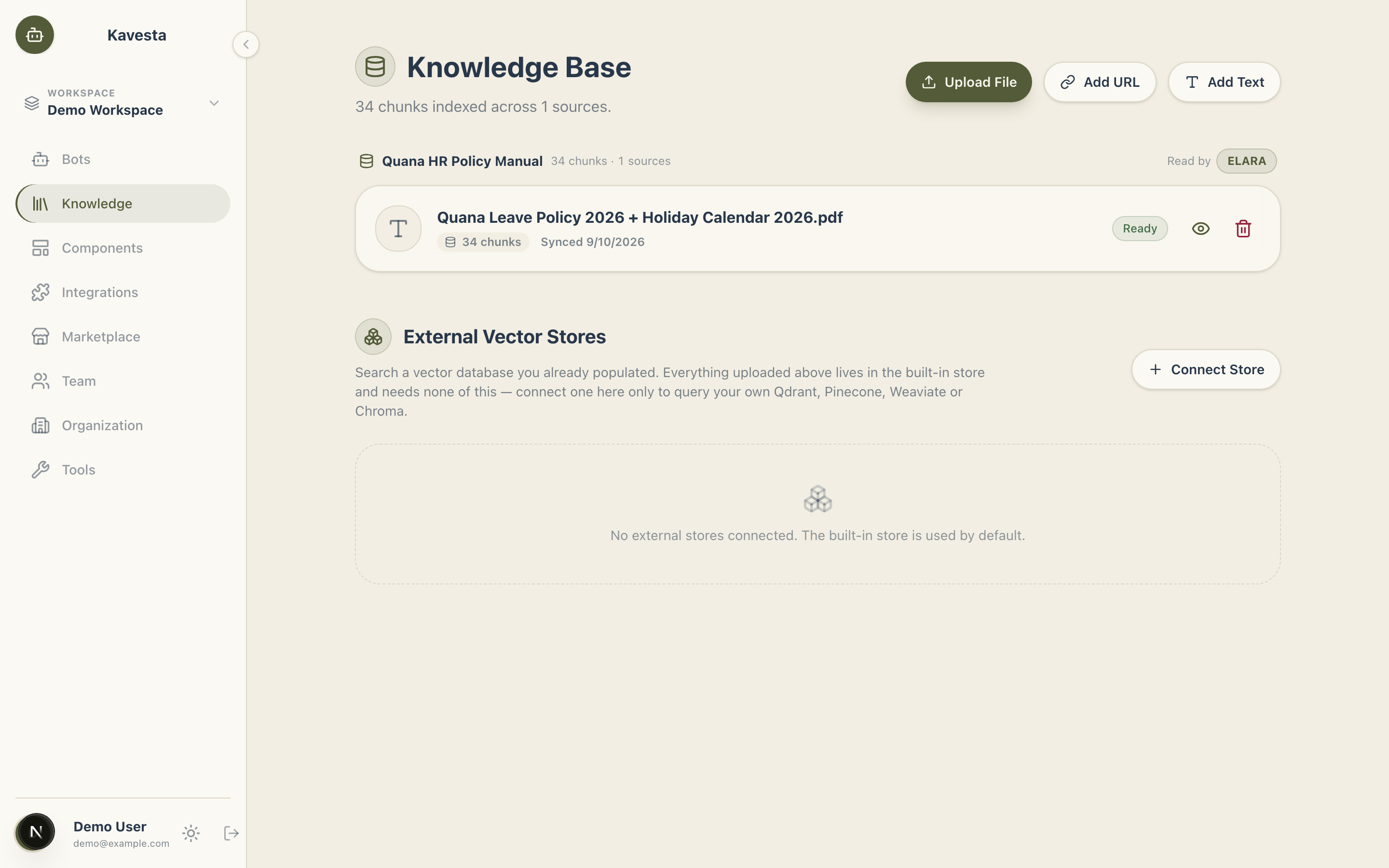
Kavesta turns a business’s own documents, systems and channels into an assistant its customers and staff can talk to. Answers come from your prices, your policies and your hours — never from a guess.
Kavesta
Build assistants that read your content, then answer from it.
Node types
12
Retrieval stages
10
To embed
2 lines
The problem
The question arrives close to midnight.
Someone is ready to buy. Nobody is awake to answer. The message sits for nine hours, and by morning they have booked with whoever answered first.
What happens today
Both of the usual answers cost you.
Either it waits until morning and they book elsewhere, or somebody drops their own work to answer it. One loses the customer. The other loses the day — your best people spending it on the same forty questions instead of the ones that need them.
The answer
Kavesta takes charge from here.
It understands the question, asks what it needs, and answers from your own documents — your prices, your policies, your hours. Never from a guess. Your team can continue to take rest.
One turn, end to end
What happens between the question and the answer
- EmbedA two-line script mounts the widget. The origin is checked against the sites you allow.
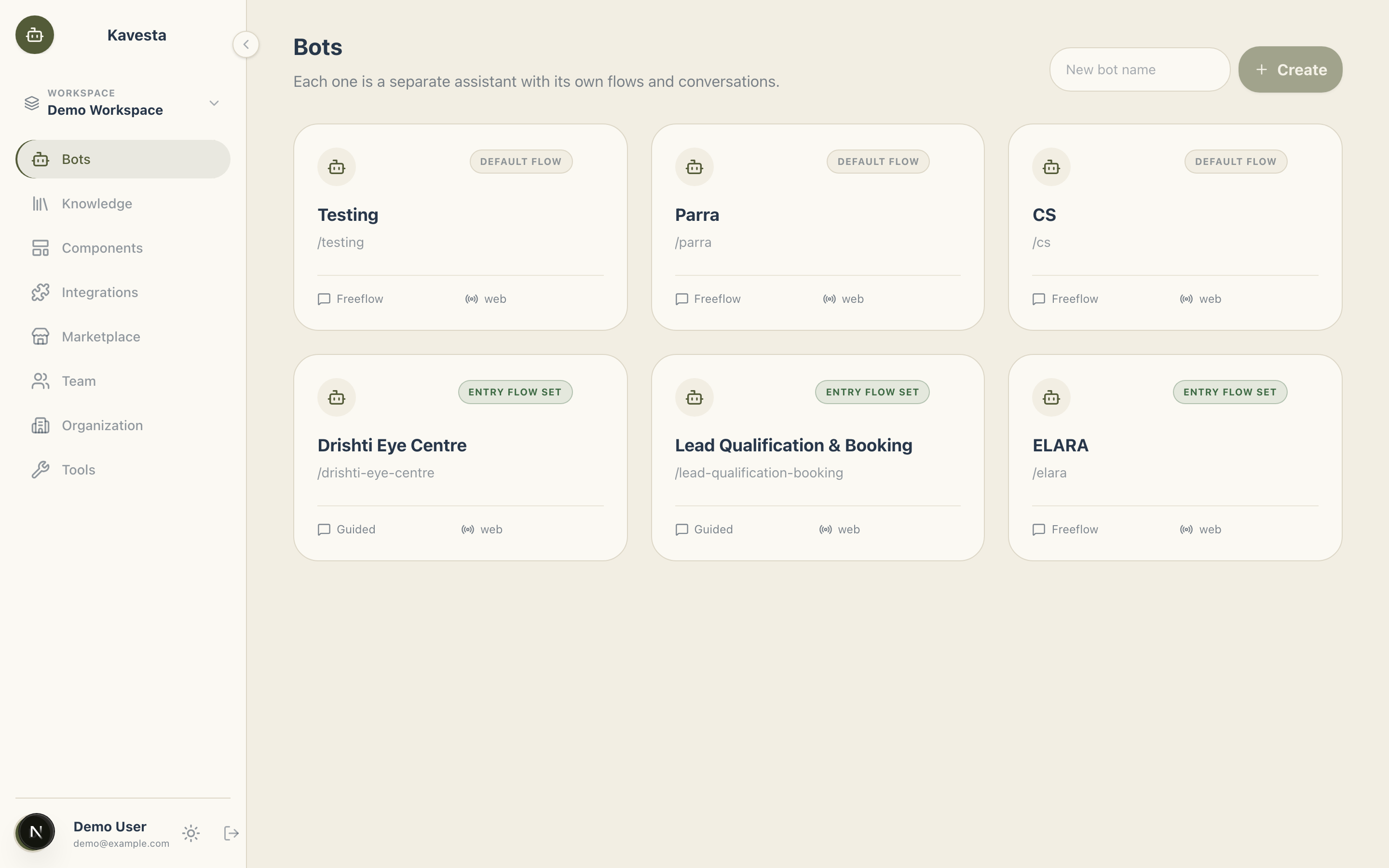
- RouteA master router reads the message and picks the right node anywhere in the bot.
- RetrieveA retrieval sub-graph runs — query rewriting, vector search, filtering, guardrails.
- AnswerThe reply carries prose and structure: tables, dates, slots, choices, ratings.
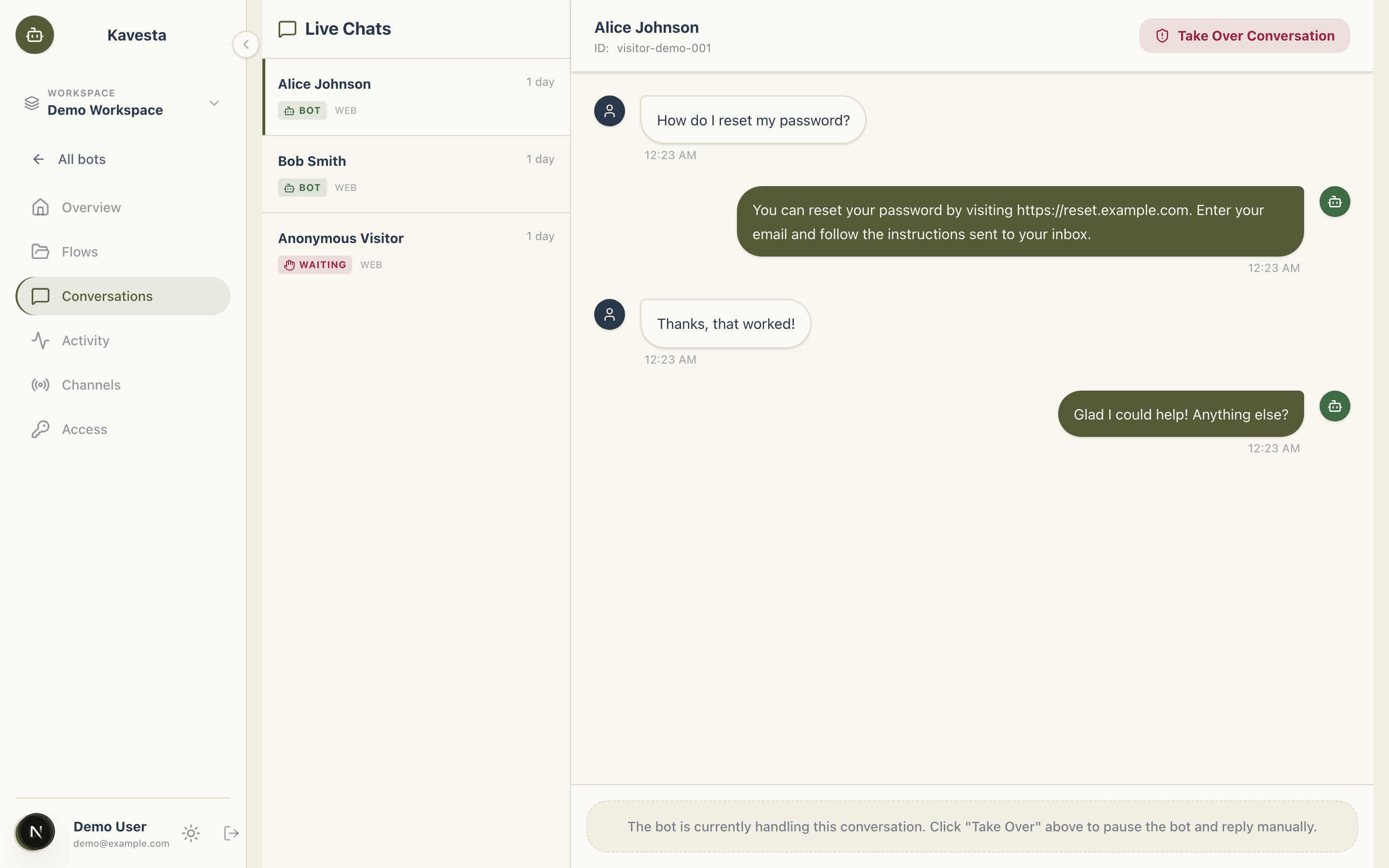
- Hand overWhen a person is needed, the whole conversation goes with the handover.
Retrieval
Ten stages, each one replaceable
- Query rewriting — HyDE, step-back, multi-query
- Router
- Cache
- Loader
- Vector search
- Filter
- Web search
- Reranker
- Summariser
- Guardrail
The studio
Twelve node types on one graph
- llm
- rag
- websearch
- api
- condition
- function
- delay
- step
- calendar-availability
- calendar-book
- note
- end
Show your work
You can see what it saw.
Every retrieval leaves a per-stage trace, readable in the playground and the logs. Skipped, errored and not-yet-implemented are three different things, and the trace says which. Most demos are a chat window; this one opens the machinery.
Tenancy
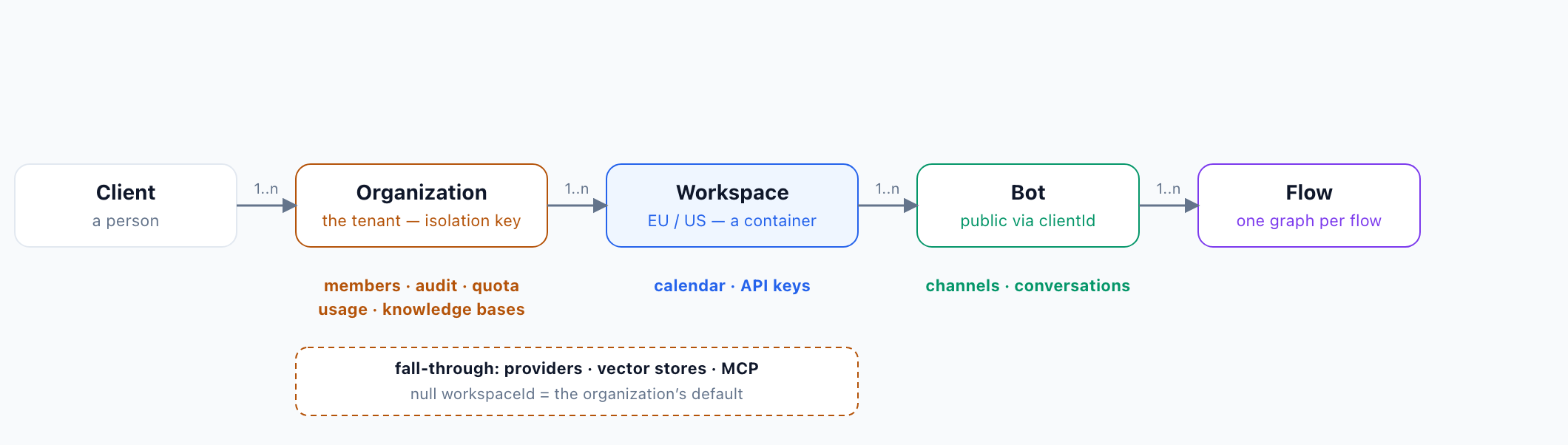
Isolation is structural, not a filter
- ClientA person
- OrganizationThe isolation boundary
- WorkspaceA region — EU, US
- BotOne assistant
- FlowOne graph
Install
Paste this before </body>
<script
  src="https://widget.quana.ai/embed/v1/embed.js"
  data-client-id="your-client-id"
  defer
></script>
Built with
One surface
Built once. Answering everywhere.
The same journeys serve your website, WhatsApp and the phone. Every conversation is logged, so for the first time you can read what customers are actually asking for — and change the answer the same afternoon.